Creatine just got its most interesting midlife data point in years. A new 12-week randomized trial from Texas A&M, published in August 2026 in the Journal of the International Society of Sports Nutrition, found that in adults aged 45–65 following an exercise and calorie-deficit program, creatine monohydrate was linked to a 1.27 kg gain in lean tissue mass and a bigger drop in body-fat percentage than placebo. Below: the numbers in charts, what the study does and does not prove, the creatine worth buying, and where whey protein fits as the supporting act.
Important: the study tested creatine monohydrate, not whey protein. Whey is not what produced these results. We bring it in because protein is the other half of the "lose fat, keep muscle" equation — and the authors themselves flagged combining creatine with higher protein intake during a calorie deficit as the next thing to test.
✨ AI Summary
- ✓The headline result: exercise + creatine added +1.27 kg of lean tissue over 12 weeks, versus +0.14 kg for exercise + placebo
- ✓Body-fat percentage fell 3.24 points with exercise + creatine versus 1.87 points with exercise + placebo
- ✓Participants took 10 g/day of creatine (2 × 5 g) — double the usual 3–5 g daily dose we recommend in our creatine guide
- ✓The study did NOT test whey protein, and it does not show whey + creatine beats creatine alone
- ✓Exercisers averaged only ~74 g protein a day (0.94 g/kg) — a gap whey can help fill, which is why the authors call for protein + creatine trials
- ✓Choose by job: creatine for training and lean-mass support, whey if you are short on protein, both if you need both
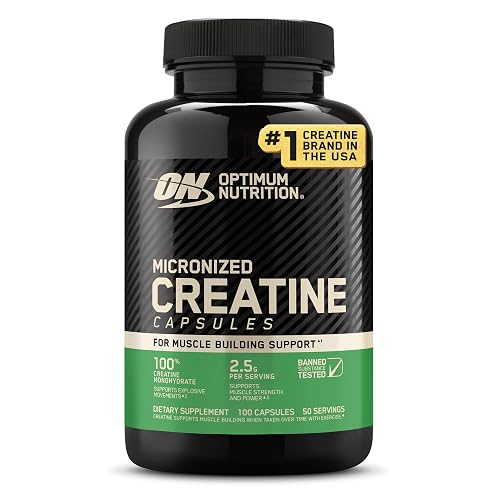
- ✓Our picks: NAKED Pure Micronized (best creatine value + NSF Certified), Dymatize Creapure, ON Micronized, Thorne; for whey, Dymatize Elite 5lb

Source: Chun et al., J Int Soc Sports Nutr, 2026. Lean-mass and body-fat figures are 12-week changes from baseline measured by DXA.
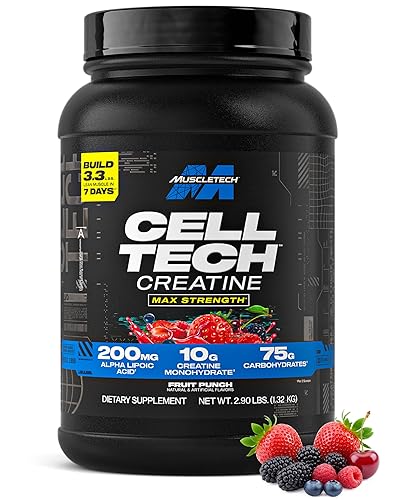
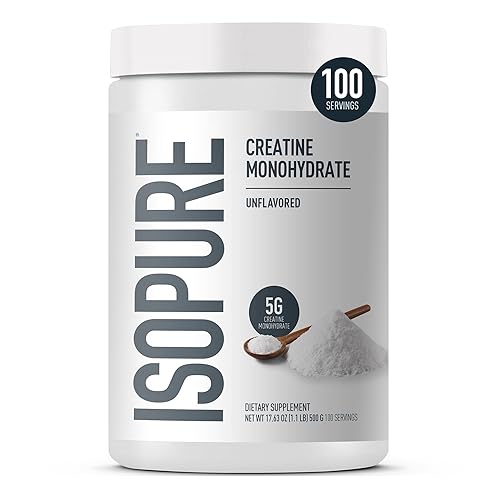
Creatine vs Whey: Different Jobs
Before the study, the quick answer. Creatine and whey are not competitors:
| Creatine monohydrate | Whey protein | |
|---|---|---|
| Main job | Supports high-intensity training and lean-mass gains | Helps you reach your daily protein target |
| What it is | Energy-system supplement (phosphocreatine) | Fast-digesting complete protein — food |
| Protein / calories | None / negligible | ~22–28 g protein, ~100–130 kcal per scoop |
| Tested in this trial? | Yes — 10 g/day for 12 weeks | No |
| Usual dose | 3–5 g/day (trial used 10 g) | 1–2 scoops/day to fill a protein gap |
| Typical cost | ~$0.22–$0.49 per 5 g serving | ~$0.91–$1.45 per scoop |
- Creatine monohydrate supports the phosphocreatine energy system your muscles use for short, hard efforts. It has no protein and negligible calories
- Whey protein is food — a fast-digesting protein source that helps you reach your daily protein target. It replaces nothing; it fills a gap
- Creatine does not provide protein, so it cannot replace it — and whey cannot do what creatine does
- Evidence in this study: creatine was directly tested; whey was not
The Study at a Glance
Researchers at Texas A&M's Exercise & Sport Nutrition Lab enrolled 73 healthy, sedentary adults and followed the 64 who finished. They were aged 45–65 (average 54.5), 40 women and 24 men. Participants first chose whether to join an exercise-and-diet program or stay in a no-exercise group, then were randomly assigned, double-blind, to creatine monohydrate or a maltodextrin placebo.
- 1Week 0
- 73 enrolled, randomized double-blind
- DXA scan, blood work, strength and cognitive tests
- 2Week 6
- 66 still in the trial
- Same testing battery repeated
- 3Week 12
- 64 completed and analyzed
- Final DXA, strength and blood markers
| Group | Exercise + diet? | Supplement | Completed |
|---|---|---|---|
| No exercise + placebo | No | Maltodextrin | 13 |
| No exercise + creatine | No | 10 g/day creatine | 13 |
| Exercise + placebo | Yes | Maltodextrin | 18 |
| Exercise + creatine | Yes | 10 g/day creatine | 20 |
Exercise groups: supervised resistance and aerobic training 3 days a week, 10,000 steps on other days, and a 300–500 kcal/day deficit (1,200–1,600 kcal/day) with 15% of calories from protein.
Why this matters for how you read it: creatine vs placebo was randomized and double-blind, but participants picked exercise or no exercise themselves. Comparisons between the creatine and placebo groups are the strongest part of the design.
Result #1: Lean Tissue Mass
Dieting usually costs muscle along with fat. In this trial, lean tissue mass — measured by DXA — told a different story once creatine was added. Change from baseline after 12 weeks:
Reported as about +1.1 kg in the paper
Creatine groups in green. Source: Chun et al. 2026 (DXA lean tissue mass).
The exercise + creatine group gained 1.27 kg of lean tissue even while eating in a deficit, and the creatine-only group (no structured exercise or diet) gained about 1.1 kg. Both gains were statistically greater than the placebo groups. The exercise + placebo group roughly held its lean mass, which is itself a decent outcome for dieters.
Result #2: Fat Mass and Body-Fat Percentage
Creatine did not "burn fat" on its own. The standout result came when it was added to exercise and a calorie deficit:
About 0.8 kg more fat mass lost than placebo
Figures as summarized from the paper's body-composition data; both groups ate the same calorie-deficit diet.
Significantly greater than all three other groups
Percentage points of body fat. Source: Chun et al. 2026.
💡 Read it this way: the creatine group lost roughly 0.8 kg more fat mass AND gained more lean tissue, so the body-fat percentage gap (−3.24 vs −1.87 points) is bigger than the scale would suggest. The authors report this as the first study to show creatine adding to the body-fat-percentage drop from exercise and diet alone.
Strength and Other Findings
- Exercise + creatine produced bigger gains in leg press and bench press one-rep max than the other groups
- Creatine without exercise also improved bench press 1RM compared with placebo
- Creatine was well tolerated, and no one dropped out because of the supplement
- Serum creatinine rose modestly (a normal effect of creatine and of muscle gain). Estimated kidney-filtration scores dipped but stayed in the normal range — the authors stress that creatinine-based eGFR is not evidence of reduced kidney function
- Several memory, mood and blood-marker results were reported, but the authors label the individual cognitive and biomarker findings exploratory
So Where Does Whey Protein Fit?
This is the part the study did not test, so we will be careful. What we can say:
- The exercise groups averaged about 74 g of protein a day — roughly 0.94 g per kg of body weight — because the diet gave 15% of calories to protein
- That is well below what sports-nutrition guidance suggests for people who lift. The International Society of Sports Nutrition position stand puts protein for exercising people at about 1.4–2.0 g per kg a day
- The authors explicitly wrote that future research should look at co-ingesting creatine with protein during a calorie deficit — they did not test it
- Whey is a convenient, complete protein for closing a gap, which is why it belongs in this conversation. It is a tool for hitting your target, not something this trial proved
An illustration (not study data)
Take a 185 lb (84 kg) adult — about the average size in the trial. At 0.94 g/kg that is roughly 79 g of protein a day. Aiming for 1.6 g/kg instead would be about 134 g. The difference, roughly 55 g, is about two scoops of a 25 g whey. Treat that as an arithmetic example of a protein gap, not a prescription or a result from the study.
Gap of ~55 g ≈ two 25 g scoops of whey
Illustrative arithmetic only — not data from the trial.
Should You Mix Whey and Creatine?
For most healthy adults there is no reason to choose one just because they are different products.
- Whey helps you reach your daily protein; creatine is taken consistently every day, and timing around training does not matter much
- Stirring creatine into a whey shake is a convenient way to make the habit stick — drink it soon after mixing, since creatine slowly degrades in liquid
- Creatine is usually 3–5 g a day. The trial used 10 g a day, so do not read it as a reason to double up — check with your doctor if you take medications or have kidney concerns
- No study here shows whey + creatine is better than creatine alone — that is exactly the open question the authors raised
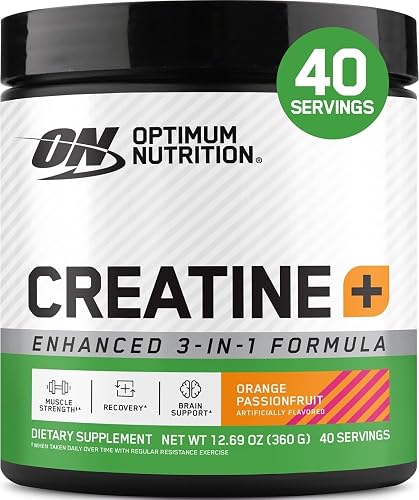 → See our Best Creatine GuideShop →
Why Muscle Matters More After 40
The study's own framing is the reason to care: calorie restriction in older adults tends to cost lean tissue, which can worsen sarcopenia (age-related muscle loss) and its metabolic risks. The standard advice is resistance training plus adequate protein, and the goal is fat loss while keeping muscle — not just a lower number on the scale.
Taking a GLP-1 medication? This trial excluded GLP-1 users, so it does not speak to that situation, though the authors list muscle preservation during pharmacological weight loss as a priority for future research. We cover protein for that case in our GLP-1 guide.
→ See our GLP-1 Protein Supplements GuideShop →What to Buy: A Simple Decision Tree
- Want the supplement this study actually tested? → Creatine monohydrate (start here)
- Not hitting your protein target? → Add whey
- Need both? → Creatine + whey — they are inexpensive together
Best Creatine Picks (Early October 2026 Prices)CREATINE
Plain creatine monohydrate is what this trial used and what the evidence supports. Skip gummies, HCl and other exotic forms unless the label math works out. The trial used 10 g a day (two 5 g servings); our guide and most research use 3–5 g, so every price below is per 5 g serving — double it if you copy the study dose.
Early-October 2026 Amazon prices from our creatine guide; confirm the final price before buying.
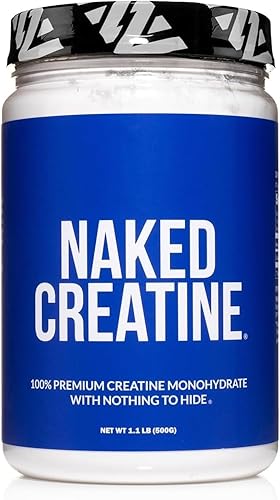
NAKED Pure Micronized Creatine Monohydrate Powder — NSF Certified, 500g
- Lab tested by Third-party tested
- 4.7★ · 16,785 ratings
- 100% vegetarian
Our top pick for this study's audience. One ingredient, NSF Certified, vegan and filler-free, in a 100-serving 500g bag — the cheapest way to get a third-party-certified tub. At the trial's 10 g a day it works out to about $0.44 a day.
- Creatine: 5g per serving | Servings: 100 | Size: 500g
- Price: $21.99 (~$0.22/serving)
- Rating: 4.7★ across 16,785 ratings
- Certification: NSF Certified
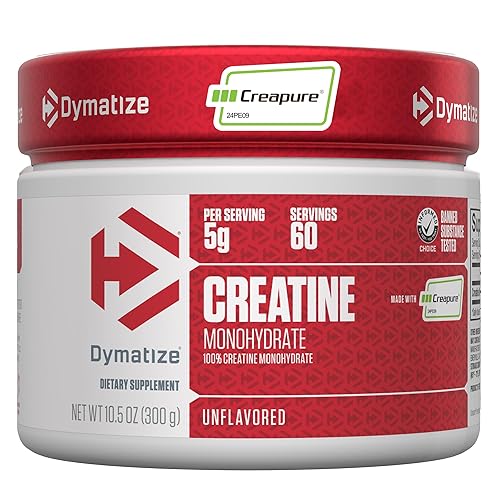
Dymatize 100% Creatine Monohydrate with CREAPURE, 60 Servings
- Lab tested by Informed Sport
- 4.7★ · 345 ratings
- 100% vegetarian
Creapure is the German-made creatine from AlzChem, the same company that supplied the creatine used in this study. A good pick if you want batch-level purity documentation at a mainstream price; it has fewer reviews than the big names.
- Creatine: 5g per serving | Servings: 60
- Price: $19.48 (~$0.32/serving)
- Rating: 4.7★ across 345 ratings
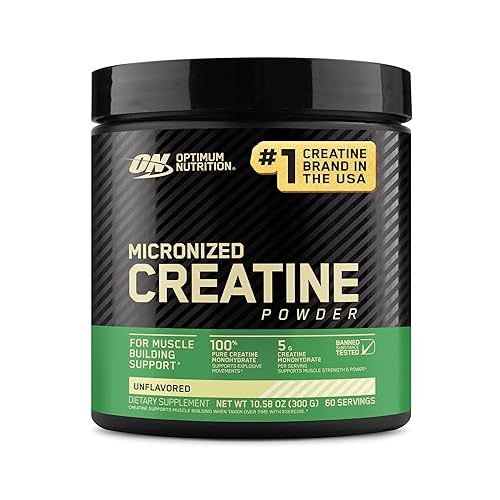
Optimum Nutrition Micronized Creatine Monohydrate Powder, Unflavored
- Lab tested by Informed Sport
- 4.6★ · 102,908 ratings
- 100% vegetarian
The mainstream default: micronized for smooth mixing in a shake, Informed Sport certified, and available everywhere from Amazon to Costco.
- Creatine: 5g per serving | Servings: 60
- Price: $17.97 (~$0.30/serving)
- Rating: 4.6★ across 102,908 ratings
- Certification: Informed Sport
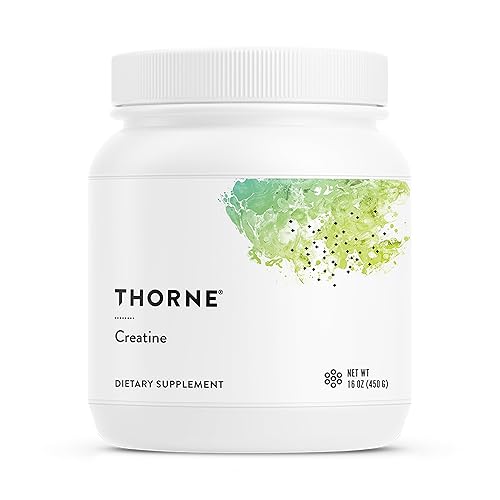
THORNE Creatine - Micronized Creatine Monohydrate Powder
- Lab tested by NSF Certified for Sport
- 4.7★ · 16,245 ratings
- 100% vegetarian
The premium option for tested athletes or anyone who wants NSF Certified for Sport batch testing.
- Creatine: 5g per serving | Servings: 90
- Price: $44.00 (~$0.49/serving)
- Rating: 4.7★ across 16,245 ratings
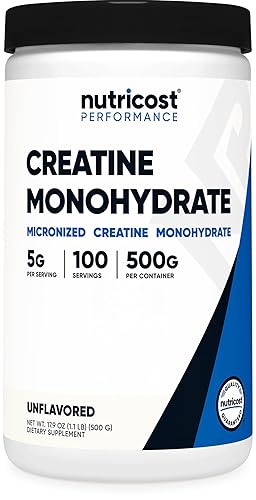
Nutricost Creatine Monohydrate Micronized Powder, 500g (100 servings)
- Lab tested by Third-party tested
- 4.7★ · 56,812 ratings
- 100% vegetarian
The budget favorite: a plain micronized monohydrate with a huge review base. Nutricost does not market a certification on this tub, so it suits buyers who prioritize price and a long track record over a lab seal.
- Creatine: 5g per serving | Servings: 100 | Size: 500g
- Price: $21.50 (~$0.22/serving)
- Rating: 4.7★ across 56,812 ratings
→ See our Best Creatine GuideShop →Whey Picks If You Need to Close a Protein GapWHEY
Whey is the supporting act here: this trial did not test it, so buy it only if your food falls short of your protein target. Compare by cost per 25 g of protein, not per tub — early-October 2026 snapshot, confirm on Amazon.com.
Quest normalized from $0.91 per 22 g serving. Prices from our whey guides.
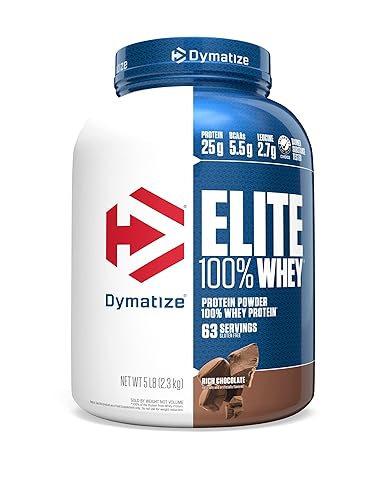
Dymatize Elite 100% Whey — Rich Chocolate 5lb (63 servings)
- Lab tested by Informed Sport
- 4.6★ · 7,090 ratings
- 100% vegetarian
The best balance of price, protein and track record for most people. 25 g of protein with 2.7 g of leucine per serving at about $0.05 per gram of protein.
- Protein: 25g per serving | Leucine: 2.7g
- Price: $76.18 for 63 servings (~$1.21/serving)
- Rating: 4.6★ across 7,090 ratings
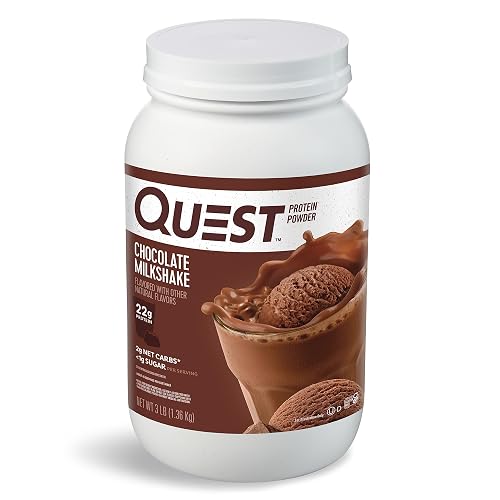
Quest Chocolate Milkshake Protein Powder — 3lb, 43 Servings
43 servings
- 4.6★ · 8,121 ratings
- 100% vegetarian
- $91 / serving
The cheapest quality option in our whey guide: 22 g of protein with 2 g net carbs, which suits a calorie-deficit plan.
- Protein: 22g per serving | 2g net carbs | <1g sugar
- Price: $38.99 for 43 servings (~$0.91/serving)
- Rating: 4.6★ across 8,121 ratings
→ See our Best Whey Protein GuideShop →💡 Stack cost: creatine alone is about $0.22–$0.30 a day at 5 g (roughly $0.44–$0.60 at the trial's 10 g). Add a scoop of Dymatize Elite (~$1.21) and the whole stack is under $2 a day. Check current prices before you buy.
What the Study Does NOT Prove
- It does not show whey + creatine is better than whey alone or creatine alone — whey was not tested
- It does not show creatine "burns fat" by itself; the fat-loss benefit appeared alongside exercise and a calorie deficit
- Groups were small (13–20 people each) and the trial ran only 12 weeks
- Participants were 45–65 and healthy, so results may not carry over to younger adults, older adults, or people with medical conditions
- Whether to exercise was the participants' choice, not randomized
- Individual cognitive and blood-marker results are exploratory and need confirmation
- Disclosure: AlzChem, a creatine maker, supplied the creatine and funded some assays, and the senior author chairs AlzChem's scientific advisory board. The authors say the sponsors were not involved in data collection, analysis or interpretation
The WheySearch Verdict
- Creatine → the supplement this trial tested: +1.27 kg lean mass and a bigger body-fat drop alongside exercise and a deficit
- Whey → optional support that helps you hit your protein target if food falls short
- Fat loss → still comes mainly from your overall diet and activity — creatine helped composition at the margin
If you are over 40 and cutting, the practical takeaway is not a magic stack. It is lifting weights, eating enough protein, and considering a cheap, well-tested creatine monohydrate. Compare whey and creatine by price, protein per serving and certification on our comparison pages, and confirm prices on Amazon before you buy.
Frequently Asked Questions
Can you take whey and creatine together?
Yes. There is no known interaction, and mixing creatine into a protein shake is a common, convenient habit. Drink it soon after mixing.
Is whey or creatine better for muscle?
They do different things. Whey supplies protein; creatine supports high-intensity training performance. This trial tested creatine only.
Does creatine help with fat loss?
Not directly. In this trial, creatine plus exercise and a calorie deficit produced a bigger drop in body-fat percentage than exercise and diet alone, mainly by adding lean tissue while fat mass fell.
Does whey protein help preserve muscle during weight loss?
Adequate protein, together with resistance training, is the standard recommendation for preserving muscle while dieting. Whey is a convenient way to reach your target, but this study did not test it.
Should I take creatine while cutting?
Creatine is generally well tolerated and does not add meaningful calories. It may cause a small initial rise in water weight in muscle. Talk to a doctor first if you have kidney disease or take medications that affect the kidneys.
Does creatine cause weight gain?
It can add a little scale weight from water held in muscle early on. In this trial the exercise + creatine group still lost body weight and fat mass while gaining lean tissue.