Plant protein has gone from a fringe vegan product to a mainstream supplement category in India. If you are lactose intolerant, vegan, concerned about the environment, or simply want to diversify your protein sources - plant protein powders have matured enough to deliver real results. But not all plant proteins are created equal. This guide tells you which sources actually build muscle, which taste terrible, and which Indian brands are worth buying.
✨ AI Summary
- ✓Pea protein isolate is the best single-source plant protein - 80-85% protein with good leucine content
- ✓Pea + brown rice blend is the gold standard - together they form a complete amino acid profile equivalent to whey
- ✓Plant protein builds the same amount of muscle as whey when total daily protein is matched (multiple studies confirm this)
- ✓Main advantages: zero lactose, no bloating, vegan-friendly, lower environmental impact
- ✓Main trade-offs: slightly chalky taste, typically 10-15% more expensive per gram of protein than budget whey
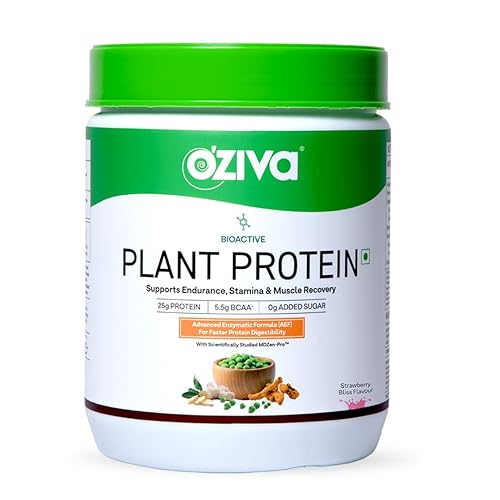
- ✓Best overall: OZiva Plant Protein - pea + brown rice blend, clean label, India's top seller
- ✓Best budget: Boldfit Plant Protein - affordable entry point with added digestive enzymes
- ✓Best unflavoured: AS-IT-IS Plant Protein - zero additives, lab tested, mix into anything
Plant Protein Sources Ranked
Not all plant proteins are the same. Here is an honest ranking of every plant protein source you will find on Indian supplement labels:
Tier 1: Excellent for Muscle Building
- Pea Protein Isolate (80-85% protein): High in leucine (the amino acid that triggers muscle protein synthesis). Low in methionine, which is why it pairs perfectly with rice protein. Best single-source option
- Soy Protein Isolate (85-90% protein): Complete amino acid profile on its own. Good leucine content. The phytoestrogen concern is massively overstated in normal supplementation doses (20-40g/day)
- Pea + Brown Rice Blend: The gold standard combination. Together they provide all essential amino acids in ratios comparable to whey. Most premium Indian plant proteins use this blend
Tier 2: OK but Not Ideal Alone
- Brown Rice Protein (70-80% protein): Good protein content but low in lysine. Works well when blended with pea or soy but incomplete on its own
- Hemp Protein (45-50% protein): Complete amino profile but low overall protein percentage. You need much larger servings to match other sources
Tier 3: Marketing Over Substance
Affiliate link: we may earn a small commission if you buy through it, at no extra cost to you.
- Quinoa Protein: Sounds impressive but protein yield per serving is very low. Better eaten as whole quinoa in meals
- Spirulina/Chlorella: Micronutrient powerhouses but terrible protein supplements. You would need 100g+ daily for meaningful protein, which is neither practical nor affordable
The soy and estrogen myth: At supplementation doses of 20-40g per day, soy protein does NOT meaningfully affect testosterone or estrogen levels in men. This has been confirmed by multiple meta-analyses. The concern originated from extremely high-dose animal studies that do not translate to human supplementation.
Plant Protein vs Whey - The Real Comparison
This is the question everyone asks. Here is the evidence-based comparison:
- Muscle building: A 2019 study in the Journal of the International Society of Sports Nutrition found that pea protein produced identical muscle thickness gains to whey protein after 8 weeks of resistance training
- Amino acid profile: Pea+rice blends score 0.9-1.0 on the PDCAAS scale (whey scores 1.0). Practically equivalent
- Digestion speed: Plant protein absorbs slightly slower than whey isolate. This is actually beneficial for sustained amino acid delivery
- Digestibility: For lactose-intolerant individuals (a huge portion of Indian adults), plant protein eliminates bloating, gas, and stomach cramps entirely
- Price: Plant protein is typically 10-15% more per gram of protein than budget whey. The gap is closing as the category matures
- Taste: Whey still wins here. Modern plant proteins are much better than 3 years ago, but chocolate whey tastes like a milkshake while chocolate plant protein tastes like, well, plant protein with chocolate
Top Picks for India 2026
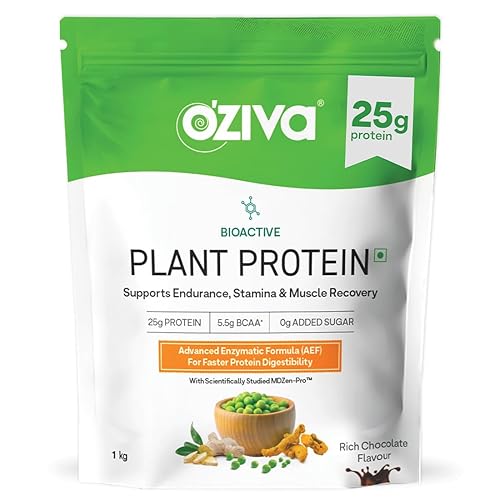
1. OZiva Plant Protein 1kg - Best Overall
India's best-selling plant protein and for good reason. Pea + brown rice blend delivers 25g protein per serving with a complete amino acid profile. Clean label with no artificial sweeteners - uses stevia instead. The chocolate flavour is the most palatable in the category. FSSAI certified and available across Amazon India, Flipkart, and the OZiva website.
- Protein per serving: 25g from pea + brown rice blend
- BCAAs: 5.5g per serving (competitive with mid-range whey)
- Added digestive enzymes for better absorption
- No artificial sweeteners or colours
- Price: Approximately Rs.1,800-2,200 for 1kg depending on flavour
2. Boldfit Plant Protein 1kg - Best Budget
Boldfit has rapidly grown as an affordable Indian supplement brand. Their plant protein offers 25g protein per serving from a pea isolate base with added digestive enzymes. At Rs.1,200-1,500 for 1kg, it is the most affordable plant protein with decent formulation. Flavour is acceptable but not outstanding - chocolate is the safest choice.
3. AS-IT-IS Plant Protein 1kg - Best Unflavoured
If you want pure plant protein with absolutely zero additives, AS-IT-IS delivers. Unflavoured pea protein isolate with lab certification. Mix it into smoothies, oatmeal, or pancake batter. The blank canvas approach means you control exactly what goes into your shake. Lab tested by third-party facilities.
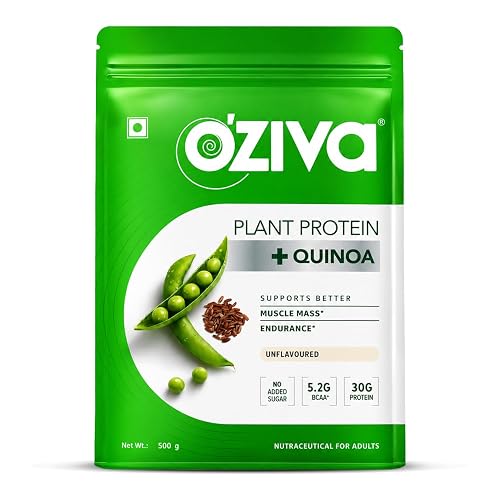
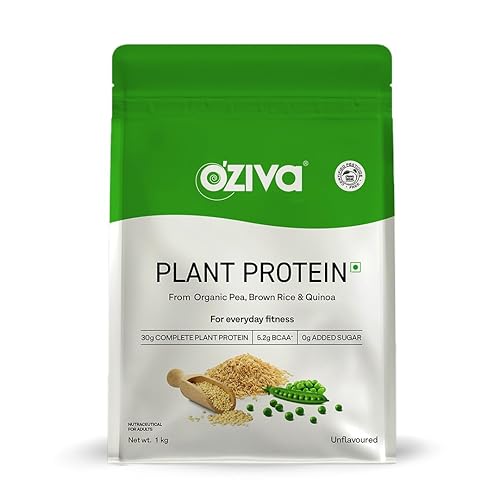
4. OZiva Plant Protein Pea Isolate (Unflavoured) 500g - Clean Single-Source Pick
500g
- 4★ · 2,230 ratings
- 100% vegetarian
For a pure single-source option, OZiva's unflavoured pea protein isolate keeps the label short - vegan, no added sugar, and easy to blend into smoothies or oats. 4.0★ across 2,000+ ratings, and the smaller 500g pack makes it a low-commitment way to test plant protein before committing to a full 1kg tub.
Who Should Choose Plant Protein Over Whey
- Lactose intolerant people: An estimated 60-70% of Indian adults have some degree of lactose intolerance. If whey gives you bloating, gas, or stomach cramps, plant protein removes the problem entirely
- Vegans and strict vegetarians: Obviously. Plant protein is the only powder option
- People with whey-related acne: Some individuals report acne improvement after switching from whey to plant protein. The insulin/IGF-1 spike from dairy may contribute
- Environmentally conscious consumers: Plant protein production uses 72% less water and generates 52% fewer emissions than dairy whey
- Anyone who just wants to try something different: Variety in your protein sources is nutritionally sound
Taste hack for plant protein: Blend with a frozen banana, 1 tbsp peanut butter, and cold milk (or oat milk). This completely masks the earthy plant protein taste and creates a smoothie that genuinely tastes good. The banana adds natural sweetness and the peanut butter adds creaminess that unflavoured plant protein lacks on its own.
How to Get the Most from Plant Protein
- Hit your total daily protein target: 1.6-2.2g per kg of bodyweight from all sources. The source matters less than the total
- Use a blend (pea + rice) rather than single-source for a complete amino acid profile
- Take 25-30g per serving for maximum muscle protein synthesis per meal
- Pair with creatine: Vegans and vegetarians benefit the most from creatine supplementation since baseline levels are naturally low
- Consider adding a leucine supplement (2-3g) to your plant protein shake to match whey's leucine content exactly
- Shake vigorously or blend: Plant protein tends to be thicker and can clump more than whey. Use a blender or high-quality shaker
The India-Specific Angle
India has one of the highest rates of lactose intolerance in the world, with estimates ranging from 60-70% of the adult population. Combined with a large vegetarian and increasingly vegan population, plant protein is not just a western trend here - it genuinely solves a real dietary challenge for millions of Indians. The market has responded: Indian brands like OZiva, Boldfit, and AS-IT-IS now offer plant proteins at price points competitive with mid-range whey, closing the value gap significantly.
Compare all plant protein products available in India on WheySearch with real-time Amazon pricing and protein-per-rupee calculations. Check the plant protein category page for full brand comparisons.